Omschrijving
"An ambitious account of the nature of violence in civil wars, paying attention to regional variation and gender – a ‘must read’ for anyone interested in how ordinary people negotiate violence."
— Joanna Bourke, Professor Emerita of History, Birkbeck, University of London, UK
"This book of essays is about the multiple ways international war bled into civil war in the period 1914-50. Both forms of armed conflict bred a pathological condition with us still. The targeting of civilians became not just collateral damage, but a tool to destroy or cow a people into submission. A tract for the times, with disturbing echoes of today’s violent world."
— Jay Winter, Charles J. Stille Professor of History Emeritus, Yale University, USA
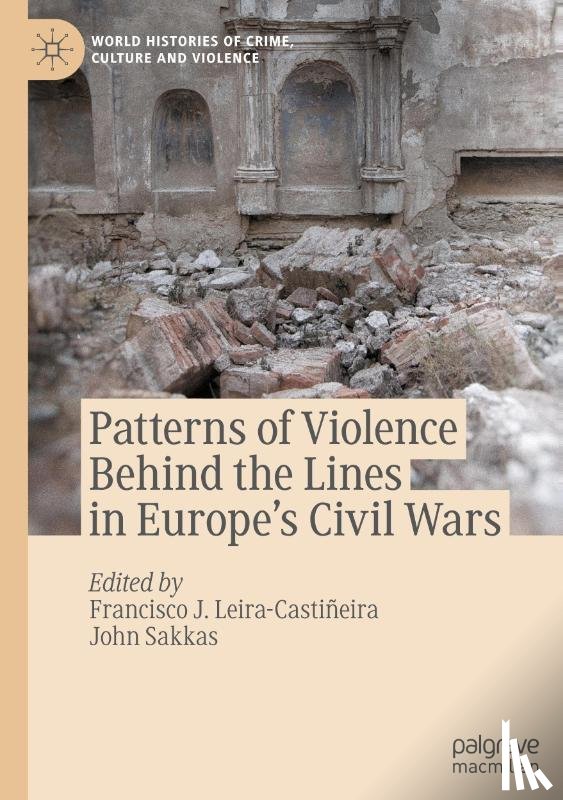
This book examines the violence experienced by noncombatants during the civil wars in a number of countries, such as Russia, Finland, Ireland, Spain, France, Italy, Greece and Yugoslavia in the first half of the 20th century. By studying both the victims and perpetrators of violence, it aims at exploring what happens when differing groups within a polity comes to blows and in which ways internal conflicts manifest themselves and permeate societies. The determinants of violence in civil wars are highly complex with a large variation in levels, types, and practices. Identifying and analysing the ways violence is produced and exercised in the rear guard is fundamental to understanding the European civil wars as a whole. In the first part, the authors of the volume seek to unravel the complexities and patters of rearguard violence, while in the second part they focus on the violence perpetrated on and by women in civil wars.
Francisco J. Leira-Castiñeira is Ramon y Cajal fellow at Instituto de Política y Gobernanza of Universidad Carlos III de Madrid, Spain.
John Sakkas is Professor of Modern History in the University of the Aegean, Greece.