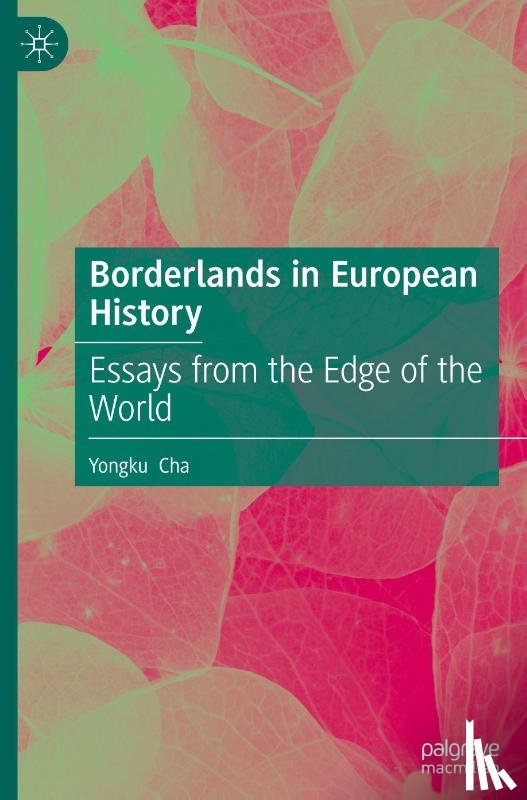
Borders are frequently conceived as defensive lines—rigid edges of sovereignty, fortified margins, or hotspots of conflict. This book challenges that assumption. By rethinking borders not as barriers but as dynamic spaces of encounter, it redefines the very foundations of border studies as a historical discipline.
Focusing on Europe and its colonial territories across both pre-modern and modern eras, the author demonstrates how borderlands have repeatedly served as sites of exchange, negotiation, and creativity. Far from being static peripheries, these regions have produced hybrid identities, fostered transboundary solidarities, and yielded unexpected responses in moments of crisis. Through vivid historical examples, the book shows that borders often become generative centers—places where new ideas, communities, and forms of coexistence emerge.
Clear, compelling, and rigorously researched, this book offers a crucial corrective to traditional border scholarship. It urges readers to rethink how borders have operated across history, how they have shaped human lives, and why their significance endures today. In a world that witnessed the extraordinary border closures of COVID-19, this work provides a timely and necessary opportunity to reflect anew on what borders truly mean.
Yongku Cha is a Professor in the Department of History at Chung-Ang University in Seoul, South Korea. He received his Bachelor of Arts (BA) in History from Korea University and both his Master’s (MA) and Doctorate (PhD) in History from the University of Passau, Germany. He has served as Director of the HK+ Research Center for Reconciliation and Coexistence in Contact Zones (RCCZ) at Chung-Ang University.
Ik heb een vraag over het boek:
‘Borderlands in European History - Cha, Yongku’.
Vul het onderstaande formulier in.
We zullen zo spoedig mogelijk antwoorden.