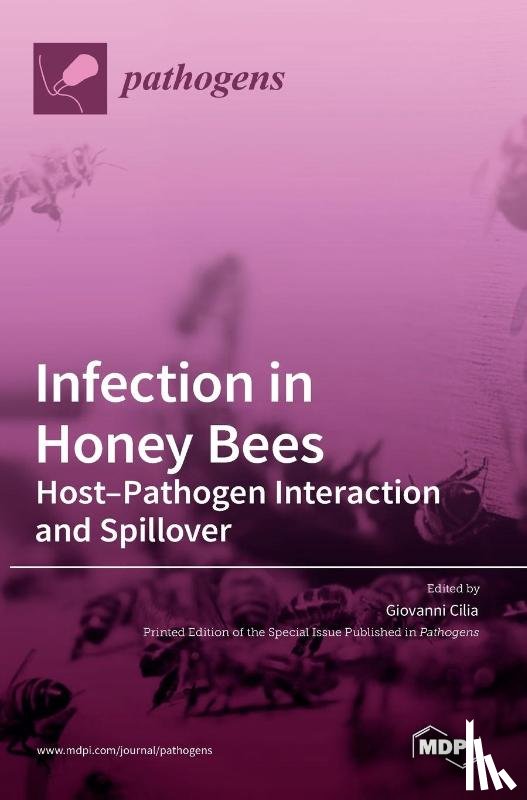
Honey -bee pathogens are spread worldwide and are strongly related to the decline of honey bee populations, with which has severe implications for beekeeping, honey production and ecology. Honey bee pathogens are continuously studied by researchers to with the aim to better understand the host-s-parasites relationship of these pathogens and the effects that they have on the bee coloniesy. Honey bee pathogens include bacteria (i.e. i.e., Melissococcus plutonius and Paenibacillus larvae), microsporidia (i.e. i.e., Nosema apis and Nosema ceranae), fungi (i.e. i.e., Ascosphaera apis), protozoa (i.e. i.e., Lotmaria passim, Crithidia bombi and Crithidia mellificae) and viruses (i.e. i.e., ABPV, CBPV, IAPV, KBV, DWV, BQCV and SBV). All of these pathogens are able to infect other bee species; infections would have with important implications in for their life cycles (e.g. e.g., Osmia sp. and Bombus sp.) or cause unknown epidemiological effects for other hymenopterans. BesidesIn addition, old and new invasive pests (such as Varroa destructor, Aethina tumida, Vespa velutina, etc.) necessitate more studies to definite define their role as possible vectors or possible sources of infection for honey bees. For these reasons, knowledge on honey -bee pathogens has become a matter of public interest and is connected with the critical role of honey -bee health. The aim of this Special Issue is to explore honey bee pathogens, considering any aspect in relation to host-pathogen interaction and highlighting the possible interaction and spillover with other bee species and invasive pests, through a series of research articles focusing that focus on different aspects of pathologies.
Ik heb een vraag over het boek:
‘Infection in Honey Bees - CILIA, GIOVANNI’.
Vul het onderstaande formulier in.
We zullen zo spoedig mogelijk antwoorden.