Omschrijving
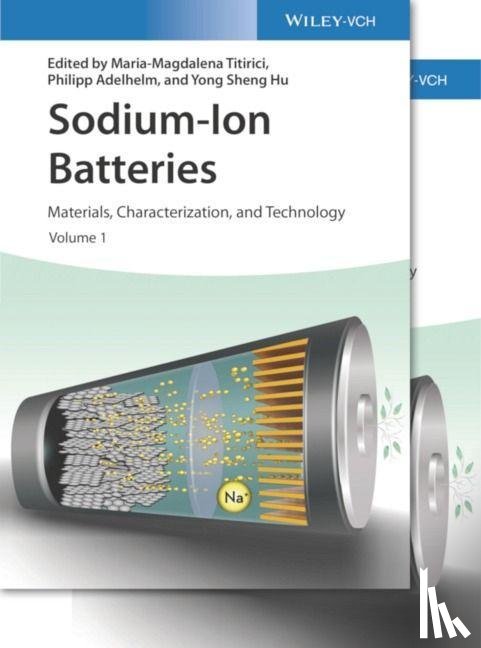
Presents uparalleled coverage of Na-ion battery technology, including the most recent research and emerging applications Na-ion battery technologies have emerged as cost-effective, environmentally friendly alternatives to Li-ion batteries, particularly for large-scale storage applications where battery size is less of a concern than in portable electronics or electric vehicles. Scientists and engineers involved in developing commercially viable Na-ion batteries need to understand the state-of-the-art in constituent materials, electrodes, and electrolytes to meet both performance metrics and economic requirements. Sodium-Ion Batteries: Materials, Characterization, and Technology provides in-depth coverage of the material constituents, characterization, applications, safety, and commercialization of Na-ion batteries. Contributions by international experts discuss the development and performance of cathode and anode materials as well as liquid and solid electrolytes. Specific chapters address analytical tools (NMR, X-ray and neutron scattering), computational studies and practical aspects. - Features a comprehensive overview and discussion on the various electrode materials (graphite, carbons, alloys, layered oxide, phosphates, Prussian blue compounds) and electrolytes (organic liquid electrolytes, ionic liquids, solid oxide electrolytes, polymer electrolytes) - Reviews the use of special analytical tools for electrode characterization and gives an overview on computational studies - Includes a timely overview of commercial perspectives, life cycle assessment, and safety aspects of Na-ion batteries - Covers emerging technologies including Na-ion capacitors, aqueous sodium batteries, and solid-state batteries The handbook Sodium-Ion Batteries: Materials, Characterization, and Technology is an indispensable reference for researchers and development engineers, materials scientists, electrochemists, and engineering scientists in both academia and industry.