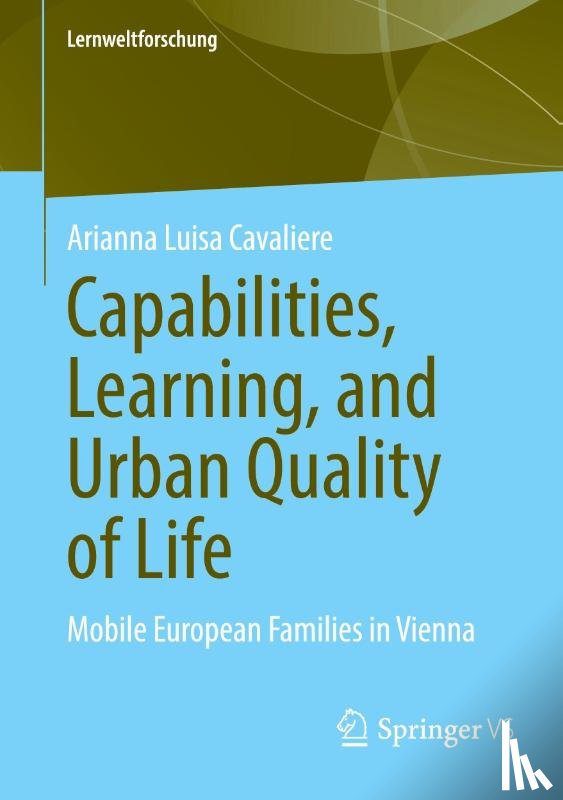
What makes a neighborhood livable, and what do urban inhabitants need to learn in order to be able to use the city according to their needs, wishes, and aspirations? The empirical study presented in the book, embedded in urban sociology and educational science, is set in Vienna, a city that has long been considered the most livable city in the world by city rankings, and adopts the analytical perspective of the Capability Approach. Between October 2020 and February 2022, guided interviews were conducted with 16 families of mobile European families with children, the neighborhoods of residence were explored by means of go-alongs and the places of origin by means of virtual journeys. Numerous maps, photos, and excerpts from conversations enrich the text. The Author Arianna Luisa Cavaliere is a postdoctoral researcher at University of Graz (Austria), Institute of Educational Sciences. She earned a PhD in urban studies from the department of Sociology and Social Research of University of Milan-Bicocca (Italy). Her research interests include diversity in schools and society, intra-EU migrations, quality of life at a neighborhood and urban level, and university didactics.
Ik heb een vraag over het boek:
‘Capabilities, Learning, and Urban Quality of Life - Cavaliere, Arianna Luisa’.
Vul het onderstaande formulier in.
We zullen zo spoedig mogelijk antwoorden.