Omschrijving
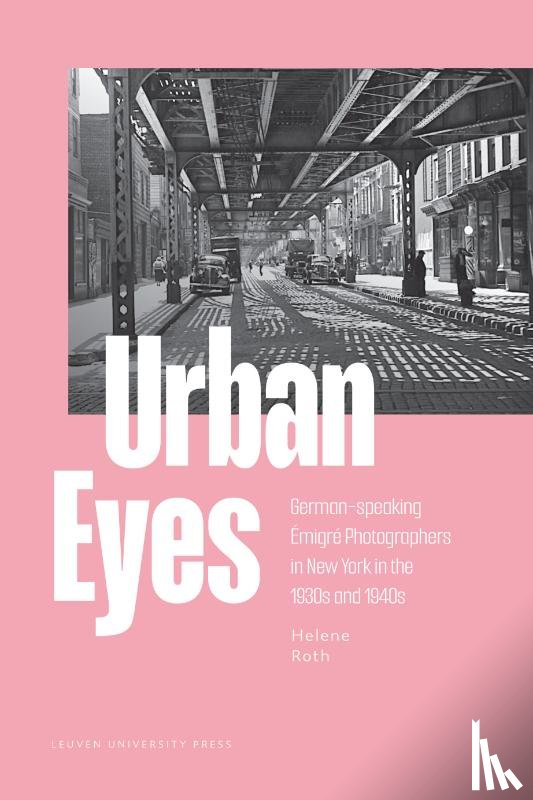
Exile through the camera’s eye in New York When the National Socialists came to power, New York became a major city of arrival and a new base for German-speaking photographers. At this time, photography was undergoing a radical transformation as it sought to establish itself as an art form. The émigrés, in turn, brought with them a broad spectrum of professional training and photographic skills. The camera served as a medium for engaging with the metropolis, reflecting on the experience of migration, building networks and simply surviving economically. In order to comprehensively analyse the complex relationships between photography and exile in the context of the metropolis of New York, Helene Roth takes a closer look at the creative achievements and heterogeneous perspectives, but also the setbacks of émigré photographers. From a transnational perspective, she engages with the socio-cultural, political and artistic developments of the 1930s and 1940s. When the National Socialists came to power, New York became a major city of arrival and a new base for German-speaking photographers. At this time, photography was undergoing a radical transformation as it sought to establish itself as an art form. The émigrés, in turn, brought with them a broad spectrum of professional training and photographic skills. The camera served as a medium for engaging with the metropolis, reflecting on the experience of migration, building networks and simply surviving economically. In order to comprehensively analyse the complex relationships between photography and exile in the context of the metropolis of New York, Helene Roth takes a closer look at the creative achievements and heterogeneous perspectives, but also the setbacks of émigré photographers. From a transnational perspective, she engages with the socio-cultural, political and artistic developments of the 1930s and 1940s. Chapter 1. Urban Eyes – An Introduction
1.1 Photography and Exile: State of the Art
1.2 Migrating Material: Archives and Source Material
1.3 Forging the City: Research Question and Methodologies
Chapter 2. New York as an “Arrival City” for German-speaking Émigré Photographers in the 1930s and 1940s
2.1 The Camera as a Portable Medium in New York Exile
2.2 Photography in New York in the First Half of the 20th Century
Chapter 3. From Europe to New York : Emigration Routes between Departure, Passage, and Arrival
3.1 Between Europe and New York: Images of Departure as Remembrance
3.2 At Sea, on Board, or on Stopover: Transitory Photographs on the Passages 60 3.3 Me and the Camera: First Pictures in New York
Chapter 4. Camera Actors in the City : Urban Practices in New York Exile
4.1 Footpath, Passers-by, and Facades: Walking and Photographing in Urban Space in New York
4.2 Fast or High Up: Photographing Driving under, through, or over the City
4.3 Window Views: Serial Photography from the Apartment
Chapter 5. Printed Photographs : Photobooks and Photo Albums in New York Exile
5.1 Conceiving and Circulating: Exile Publishers as Catalysts for Photobook Publications
5.2 The City as Book: Photobooks of and about New York
5.3 From South to North and East to West: Photonarrative Street and Milieu Studies in the Photobook
5.4 Exploring, Experimenting, and Gluing: The Conception of Photo Albums and Scrapbooks in New York
Chapter 6. Business with Pictures : Photographic Economies in Exile
6.1 Selling Your Pictures: Photo Agencies as Networks and Sources of Income in Exile
6.2 “The World of Tomorrow”: The 1939 World’s Fair in New York as a Pictorial Motif and Commission Opportunity
6.3 Translating and Photographing: Freelance Work for the Museum of Modern Art
6.4 Dance, Theatre, Animals: Female Émigré Photographers’ Photo Studios around Central Park
Chapter 7. Photo Experts in Exile : Transcultural Photographic Theories and Practices between Exchange, Teaching, and Mediation
7.1 Exhibiting and Representing: Artistic Photo Discourses at Weyhe Gallery and Norlyst Gallery around 57th Street
7.2 Teaching and Practicing: Photography Courses at the New School for Social Research
7.3 Photography for All: Photographic Theory and Practice through Popular Photography and Manuals
Chapter 8. Emigration Shapes the City : Photographic Places of Exile in New York
8.1 Transtopia: The Photographic Reappraisal of Emigration in the Ellis Island Internment Camp
8.2 Visualising Placemaking: German-speaking Life around East 86th Street in Yorkville
8.3 In Public, In Private: Intermedial and Transcultural Contact Zones on West 21st Street in Chelsea
8.4 Queering Places: The Portrait Studio as Site of Sexual Orientation and Artistic Practice in Exile
Chapter 9. Functions of Photography in Exile and for Migration Studies – Epilogue
Appendixes
I. Biographies of German-speaking Émigré Photographers in New York in the 1930s and 1940s
II. Permanent/Freelance German-speaking Emigrant Photographers at Black Star, 1935–1950
Acknowledgements
List of Abbreviations
Notes
Archives
Bibliography
Index of Persons, Institutions, Magazines, Photobooks, and Neighbourhoods