Perspective on Use and Users in the History of Office Buildings
Omschrijving
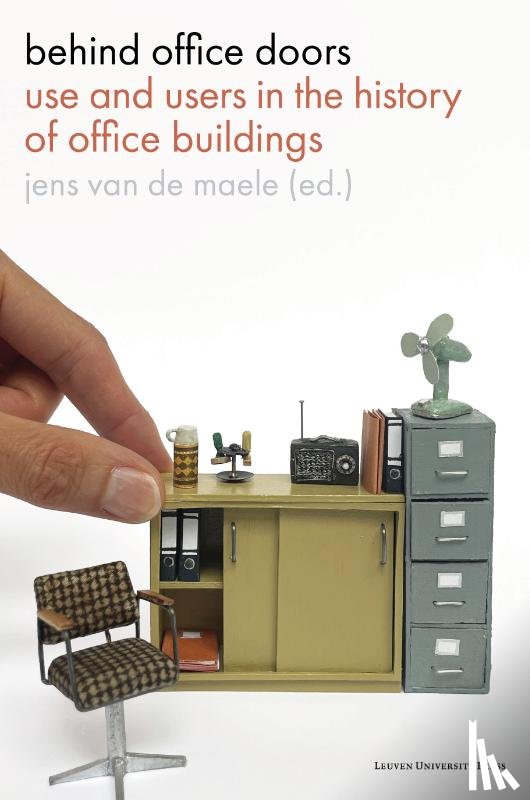
A transdisciplinary history of the 20th-century office, exploring how its spatial forms, technological systems and managerial ideologies were constructed, challenged and lived with. Throughout the twentieth century, office buildings became central to the organisation of modern societies – yet what went on inside them has remained remarkably understudied. Behind Office Doors explores this history by focusing on users and everyday practices. It examines how office spaces were conceived by architects, designers and managers, and how they were inhabited, experienced and sometimes contested by workers. From filing cabinets and air-conditioning to EU offices and colonial bureaucracies, the chapters trace how design, technology and organisational thinking shaped office life. Alongside new case studies on Europe, Asia and colonial Africa, the contributing authors reflect on how the office has been approached in historiography. Drawing on cross-disciplinary research, this book challenges the assumption that the office is too familiar to analyse – offering instead a fresh perspective on the architecture and politics of work. Acknowledgements
Introduction. Retracing Use and Users in the History and Historiography of the 20th-Century Office Building
Jens van de Maele
Part 1. Categories and representations of office users
Chapter 1. What’s the Use? The Users and Usability of the Filing Cabinet
Craig Robertson
Chapter 2. The Office in Popular Culture, or the “Plight of the Clerk”
Nicola Bishop
Part 2. The impact of normativity and standardisation on the office as an “environment”
Chapter 3. Too Cold? Gendered Conflicts over Mechanical Cooling in Early Post-war Japanese Office Spaces
Tatsuya Mitsuda
Chapter 4. Thresholds of Comfort : Managing Light, Sound and Focus in the Post-War Office Environment
Joeri Bruyninckx
Chapter 5. Surviving the Office : Workplace Design, Activism and the Health of Women Workers in 20th-Century Britain
Amy Thomas
Chapter 6. Measuring, Evaluating and Configuring : The German Debate about Safe and Healthy Screen Work
Bernd Holtwick
Part 3. Office uses conceptualised by and for the managerial elite
Chapter 7. A “Facility Based on Change” (for the Worse) : Leveraging Labour Process Theory to Understand the Evolution of Herman Miller’s Action Office
Petra Seitz
Chapter 8. The European Commission’s Office Spaces in the 1950s and 1960s : Constructing a Materialised Imaginary
Marco Ninno
Part 4. Visual essays
Chapter 9. “Mimic Men” in the Office Spaces of a “Nervous State” : The Materiality of Bureaucracy in Late Colonial Congo
Johan Lagae and Jens van de Maele
Chapter 10. Between Hierarchy, Efficiency and Pragmatism : Picturing Portuguese Government Offices in Historic Buildings during the Estado Novo Dictatorship
Ana Mehnert Pascoal
Chapter 11. Office Life in Chandigarh
Ruth Baumeister (text), Shaun Fynn (photography)
Epilogue
Martin Kohlrausch and Andreas Fickers
Contributors
Index